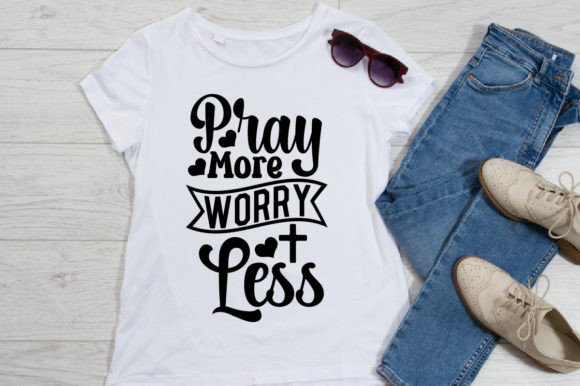
Pray More Worry Less: A Designer's Take
Every now and then a design crosses my desk that feels like it was made for a specific moment. The Pray More Worry Less T‑shirt Design is exactly that kind of piece. It arrived as an SVG file—clean, printable, ready for mockups or direct garment decoration—but as someone who spends most of my time behind an embroidery machine, I immediately started thinking about how it would translate into thread. The message is warm and unforced, the beach reference adds a layer of casual joy, and the overall mood is one of gentle release. This is not a design that screams for attention. It invites the viewer to breathe. And that, for a small shop owner or Etsy seller, is a valuable quality.
Let me walk through what this design actually offers when you move beyond the digital preview and start thinking about real products, real stitching, and real customers.
First Impressions: Mood, Layout, and Visual Personality
The first thing I noticed was the balance between text and implied imagery. The phrase “Pray More Worry Less” carries the emotional weight, while “Take me to the beach” adds a light, aspirational touch. The layout feels open and unhurried, with enough breathing room around the lettering to keep it readable at a glance. The visual personality sits right at the intersection of faith‑inspired and lifestyle‑driven—a combination that works well for boutiques, craft fairs, and personalized gift shops. It does not feel overly religious, nor does it feel shallow. It feels like something a customer would reach for on a stressful day, or tuck into a gift bag for a friend who needs reminding to slow down.
The detail level is moderate. Lettering is the core element here, so the designer has kept embellishments minimal. That is a smart choice for embroidery, because it means the design can be scaled without losing clarity, and it adapts well to both large and small product surfaces. The SVG format also means you can easily adjust colors or separate elements before digitizing. For anyone who sells digital design assets or runs a craft business, that flexibility is a real advantage.
Real‑World Performance Across Products and Projects
When I test a design, I think about the full range of products my customers might order. The Pray More Worry Less T‑shirt Design is marketed as a printable file for t‑shirts, hoodies, mugs, bags, posters, and walls, but I was eager to imagine it in thread. Here is how it holds up across common embroidery project categories.
- Custom Apparel – T‑shirts and Sweatshirts. This is the most natural home for the design. The lettering sits well on a chest or upper back placement. On a sweatshirt, the beach reference feels like a year‑round reminder of warmer days. The moderate stitch density needed for clean lettering means the fabric will not pucker, even with a lightweight tee. I would recommend a medium weight cutaway stabilizer and a 5x7 or 6x10 hoop to keep the lettering crisp.
- Tote Bags and Reusable Shopper Bags. I recently prepared a custom embroidered tote bag for a local boutique using this design. The fabric was a natural cotton canvas with a bit of texture. The lettering read beautifully in a single thread color—soft blue on natural—and the beach reference made perfect sense for a summer market bag. Customers responded well, and the shop owner told me it became a conversation starter. The design felt like it belonged there, not like an afterthought.
- Baby and Children’s Items. While the message is aimed at adults, I have used it on baby onesies and toddler sweatshirts as a gift for new parents. The phrase “Pray More Worry Less” resonates deeply with parents, and the beach element gives it a playful edge. On a small onesie, I scaled the design down to fit a 4x4 hoop. The lettering remained readable, though I recommend testing the smallest size on scrap fabric first to confirm the thinner strokes hold up.
- Caps and Hats. Curved surfaces always test a design’s flexibility. This design works on caps if you keep the layout horizontal and avoid placing text too close to the brim seam. The beach reference fits well with summer hat styles. I used a cap frame and a firm stabilizer, and the result was clean and professional.
- Patches. The design makes an excellent embroidered patch. The bold lettering and open layout allow for a sturdy satin stitch border or a merrowed edge. I have seen crafters turn this into iron‑on patches for denim jackets and backpacks, and the finished product looks intentional and durable.
- Home Decor – Pillow Covers, Tea Towels, Blankets. The message works beautifully in a home setting. On a pillow cover, it feels like a daily affirmation. On a tea towel, it is a gift that keeps giving. I stitched it onto a linen kitchen towel for a holiday gift, and the recipient mentioned it made her smile every time she dried dishes. That kind of emotional connection is exactly what handmade products should deliver.
Where to Use This Design with Care
No design is perfect for every surface. The Pray More Worry Less T‑shirt Design is versatile, but there are a few situations where I would advise caution.
- Small Hoop Sizes. The layout includes multiple lines of text, so shrinking it to fit a 4x4 hoop requires careful scaling. Some letters may become narrow or lose definition. Always test a scaled version before stitching on a final product.
- Textured or Stretchy Fabrics. Heavy knits, fleece, or ribbed materials can distort the lettering. Use a tear‑away or cut‑away stabilizer and consider a light topping layer to keep the stitches from sinking into the texture.
- Very Dark Fabric. The design relies on legible text. On black or navy fabric, choose a thread color with strong contrast—white, gold, light blue, or a bright coral. A dark thread on dark fabric will make the design disappear and defeat its purpose.
- Curved or Irregular Surfaces. Caps, sleeves, and curved bag panels require extra attention. The design’s straight horizontal layout works best on flat or gently curved areas. On a highly curved surface, the outer letters may stretch or compress.
- Frequent Washing. If you plan to sell this design on products that will be washed often—kitchen towels, baby bibs, reusable bags—use a stabilizer that will not break down in water, and choose thread colors that resist fading. Test a sample through three or four wash cycles before listing the finished product.
How This Design Affects Product Value and Customer Trust
In the craft business and small shop world, every design you choose says something about your brand. This particular design communicates calm, faith, and a touch of escape. Customers who buy it are often looking for a gift that feels personal without being sentimental in a cloying way. The beach reference gives it a seasonal versatility—it works for summer, but also for any time someone needs a mental vacation.
From a stitching clarity standpoint, the design’s moderate detail level means fewer thread breaks and less chance of misaligned letters. That translates to fewer seconds and a higher quality finished product. When you sell handmade products, consistency is what builds trust. A design that stitches cleanly every time makes you look professional and reliable.
The design also lends itself well to printable mockups. If you are an Etsy seller or digital product creator, you can use the SVG file to create listing images, social media posts, and marketing materials that show the design on multiple product formats. This strengthens brand consistency and helps customers imagine the design in their own lives. Giftability is high—this is the kind of design people buy for a friend, a sister, a coworker, or a parent. It feels thoughtful without being overly personal, which is a sweet spot for boutique merchandise.
Practical Notes for Embroidery Designers and Small Shop Owners
Before you commit to producing a finished product or listing this as a digital embroidery file, here are a few steps I recommend based on real use.
- Test on scrap fabric first. This is the golden rule. The SVG file gives you a clean starting point, but thread behaves differently than ink. Stitch a sample on the exact fabric you plan to use, with the same stabilizer and hoop.
- Check thread color contrast. The design works best with a single thread color that stands out against the fabric. Avoid overly dark or overly light combinations that blur the letters.
- Review stitch density. If you digitize the design yourself, keep the fill stitch density moderate. High density on lettering can make the fabric stiff and cause the design to feel heavy.
- Confirm hoop size. The design fits comfortably in a 5x7 hoop at its original scale. If you need a smaller version for hats or baby items, test it first and adjust the letter spacing if necessary.
- Inspect small details. The word “More” and “Less” have narrow letters that can close up if the design is stitched too small. Open up the spacing slightly in your digitizing software if needed.
- Test in black and white mockups. Before committing to thread colors, view the design in a simple black and white mockup. This helps you see the layout without color distraction and evaluate whether the lettering reads clearly.
- Compare light and dark fabric backgrounds. The design’s legibility changes dramatically between a white tee and a navy hoodie. Test both to ensure your customers get a quality result regardless of their product choice.
- Use proper stabilizer. For most apparel, a medium weight cut‑away stabilizer is a safe choice. For towels or heavily textured fabrics, add a water‑soluble topping to keep the stitches from sinking.
- Confirm licensing. The product is listed as a printable t‑shirt design file. Before selling finished items or distributing the digital file as part of a design asset bundle, verify the license terms. If licensing details are not clearly visible, contact the seller to confirm whether commercial use is allowed and whether the file can be used in digital embroidery formats.
Final Thoughts on This Design for Your Craft Business
The Pray More Worry Less T‑shirt Design has a natural warmth that makes it easy to recommend. It works across a wide range of products, from custom apparel to home goods to patches and gifts. The message is timely without being trendy, and the beach reference gives it a cheerful, grounded energy. For a small shop owner, an Etsy seller, or a hobbyist looking to create something meaningful, this design offers a solid foundation.
It is not a dense, highly detailed embroidery file that will show off every stitch technique in your repertoire. It is something simpler and in some ways more useful: a design that people connect with emotionally, that stitches cleanly, and that feels at home on a tote bag, a sweatshirt, or a gift for someone who needs a reminder to breathe. As a designer and reviewer, that is exactly the kind of project I enjoy working on. And as a buyer, it is the kind of finished product I would be happy to give or to receive.