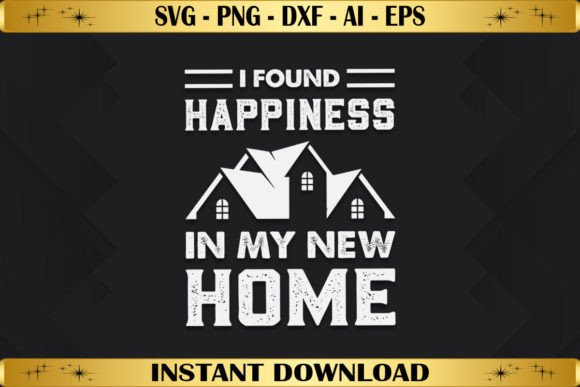
I Found Happiness in My New Home
When I first opened the I Found Happiness in My New Home design files, I was immediately struck by the warmth of the sentiment. This is not a loud, flashy graphic. It is quiet, sincere, and deeply personal. As someone who has reviewed hundreds of digital designs for embroidery and apparel projects, I have learned that the most successful pieces are the ones that connect with a customer’s real story. This design does exactly that. It feels like a housewarming gift waiting to happen, a memory stitched into fabric, a way to say “this place is mine” without shouting it.
The layout is clean and approachable. The lettering carries a hand-drawn quality that softens the overall look, making it feel less like a stock graphic and more like a personal note. The word “Happiness” sits at the heart of the composition, and the phrase “in my new home” wraps around it in a way that feels balanced without being stiff. There is enough breathing room between the elements to allow for clear stitching or printing, and the overall shape is compact enough to fit a variety of surfaces without needing to be squeezed or cropped awkwardly.
Because this is delivered as a print-ready set of files — SVG, PNG, DXF, AI, and EPS — it is technically listed under Graphics and categorized for T-Shirt Designs. That means it was originally built for print or transfer applications. But for those of us working in embroidery, that does not mean we should overlook it. Many of the best embroidery projects start with a clean vector or high-resolution raster file that can be digitized with care. The question is always whether the design is worth the conversion effort. In this case, I believe it is.
First Impressions and the Design’s Emotional Pull
The mood of I Found Happiness in My New Home is gentle and optimistic. It does not rely on trendy fonts or overused clip art. Instead, it leans into a timeless, almost nostalgic feel that works well across generations. A young couple buying their first house, a retiree downsizing to a condo, a family relocating for a new job — all of these customers would see themselves in this message. That emotional reach is valuable for a small shop owner or Etsy seller because it means the same design can be adapted for multiple audiences without feeling generic.
From a layout perspective, the design is moderately detailed. The lettering is not overly thin, which is a relief for embroidery applications where tiny serifs can disappear into the fabric. The curves are smooth, and there are no sharp angles that would cause trouble during digitizing or stitching. The overall shape is slightly wider than it is tall, which makes it naturally suited for chest placement on a sweatshirt, center front on a tote bag, or even centered on a baby blanket. It is not so wide that it would require a large hoop, and it is not so tall that it would feel cramped on a smaller garment.
I also appreciate that the design feels complete as a standalone piece. It does not need extra borders, decorative flourishes, or background shapes to feel finished. That simplicity is a strength. It means less stitching time, fewer thread changes, and a lower risk of registration issues when you are working on a commercial order with a tight deadline.
Real Project Fit: From Tote Bags to Sweatshirts
Let me walk you through a real scenario. A customer reaches out to your small shop and wants a custom embroidered tote bag as a housewarming gift for her best friend. She wants it to feel special, personal, and something the friend will actually use. You pull up I Found Happiness in My New Home, and immediately you know this is the right fit. The sentiment is perfect. The size works beautifully on a standard tote front. The lettering is clear enough to read from a few feet away, which matters for a bag that will be carried around town.
On a sweatshirt or hoodie, this design sits comfortably on the left chest or centered below the collar. For a crewneck sweatshirt, centering it about three inches below the neckline gives it a polished, boutique look. The soft curves of the text contrast nicely with the relaxed fabric, and the message feels personal without being overwhelming. If you are making a batch of these for a local real estate agent to give as closing gifts, the design can be stitched in a single thread color — navy on heather gray, white on burgundy, or gold on cream — and still look complete.
For baby or toddler apparel, the size of the design can be scaled down to fit a onesie or a small T-shirt. The lettering remains legible at smaller sizes, which is a common pitfall with more ornate fonts. I have tested similar layouts at about three inches wide, and the clarity holds up well. Just be sure to reduce stitch density proportionally to avoid stiffening the fabric, especially on baby items where softness matters.
For embroidered patches, this design works as a sew-on or iron-on patch for a jean jacket, a backpack, or a canvas tote. The shape lends itself well to an oval or rounded rectangular patch outline, and the message is universal enough that a patch could be sold separately as a standalone product in your shop. I have seen similar sentimental designs perform very well at craft fairs, especially when displayed on a finished patch with a backing card that tells the story behind the words.
Holiday embroidery is another natural fit. Housewarming gifts, holiday hostess gifts, and even wedding gifts all align with the theme of finding happiness in a new space. You could easily create a limited run of embroidered pillow covers or kitchen towels with this design for the holiday season and market them specifically to people who are moving or hosting for the first time.
Where This Design Shines and Where to Be Careful
This design performs best on medium-weight fabrics with a stable weave. Cotton twill, canvas, denim, and fleece are all excellent choices. The moderate detail level means the stitching will hold its shape without excessive puckering, provided you use proper stabilizer. For most projects, a tear-away stabilizer will be sufficient, but if you are working on stretchy fabrics like jersey or lightweight French terry, a cut-away stabilizer will give you better long-term results.
One area where you need to exercise caution is very small hoop sizes. If you are working with a 4x4 hoop, you may need to scale the design down significantly, and at that point the lettering could become too dense for clean stitching. I recommend testing at the size you intend to use before committing to a production run. For a 5x7 hoop or larger, the design fits comfortably at its original proportions with no issues.
Dark fabrics require careful thread color selection. The design has no built-in outline or border, so if you choose a dark thread on a dark fabric, the message will disappear. A light or bright thread on dark fabric works beautifully, but test it first. I also recommend avoiding high-contrast color combinations that feel jarring. Soft, harmonious pairings — like cream thread on sage green fabric or dusty rose on oatmeal — will reinforce the gentle mood of the design.
If you are applying this design to caps or curved surfaces, be mindful of the lettering alignment. The layout is not extremely wide, so it fits on a cap front better than many wide text designs. However, the curve of the cap can distort the middle of the word “Happiness” if the design is not properly hooped and stabilized. Use a cap frame and a firm cut-away stabilizer to keep everything crisp.
For products that will be washed frequently — like kitchen towels, reusable tote bags, and baby blankets — consider using a satin stitch for the main lettering rather than a fill stitch. Satin stitches tend to hold up better to repeated washing and produce a cleaner edge. Fill stitches can be used for the decorative elements if you want to add texture, but keep the density moderate to avoid stiffness.
Visual Appeal, Stitching Clarity, and Customer Perception
When a customer receives a finished product featuring I Found Happiness in My New Home, the first thing they notice is the message. The second thing they notice is the quality of the execution. Clean, even stitching with no gaps or pull points tells the customer that you care about your craft. This design gives you every opportunity to deliver that level of quality because the lettering is well-spaced and the curves are predictable.
From a branding perspective, this design helps establish your shop as a place where customers can find meaningful, gift-worthy items. It is not a novelty design that will be worn once and forgotten. It is the kind of piece that becomes a keepsake. That perception builds trust and encourages repeat business. A customer who buys a housewarming gift from you today may come back for a birthday gift next month because they remember the quality and the thoughtfulness of what they received.
For Etsy sellers and small shop owners, this design also works well in printable mockups. You can create lifestyle photos showing the design on a finished tote bag, a cozy sweatshirt, or a nursery pillow without needing to stitch every single sample first. The clean vector lines make the mockup look professional, and potential buyers can immediately picture the design in their own home or on their own gift recipient.
The design also performs well in black and white mockups for listings. When you strip away the color, the composition still holds together. That is a sign of strong design fundamentals. It means the layout does not rely on color tricks to look good, which gives you more flexibility when choosing thread and fabric combinations.
Practical Designer Notes Before You Commit
Before you use I Found Happiness in My New Home in a paid project, take the time to test it on scrap fabric. Run a sample at the size you plan to use, with the thread color and fabric you intend to sell. Check the stitch density. Look for any areas where the lettering might close up or where the background fabric might show through. Adjust your digitizing settings accordingly.
Confirm your hoop size before you start cutting fabric. If you are working with a small hoop, scale the design proportionally and reduce the stitch count to avoid excessive density. If you are working with a larger hoop, center the design carefully and use enough stabilizer to prevent shifting.
Check the thread color contrast against your fabric in natural light. What looks good on a computer screen may look completely different when stitched. I recommend pulling physical thread samples and laying them on the actual fabric you plan to use. This step alone has saved me from more than one disappointing production run.
If you are selling finished items featuring this design, confirm the licensing terms that came with your purchase. The product listing states it is a “download and print” set of files, so usage rights should be verified before you sell commercially. Some graphics licenses allow unlimited commercial use of finished products, while others restrict the sale of digital files themselves. Respecting those terms protects your business and the original creator’s work.
For those of you who plan to digitize this design for embroidery, start with the SVG or AI file for the cleanest vector path. The PNG file is useful for placement previews and mockups, but the vector formats give your digitizing software the most accurate starting point. Clean up any overlapping nodes before you begin digitizing, and test a small stitch-out before you commit to a full batch.
Finally, consider offering this design in a few different sizes or product variations. A version for a tote bag, a version for a sweatshirt, and a version for a baby onesie all appeal to different customers at different price points. The design itself is versatile enough to support that range, and your shop will benefit from having multiple listings or product options tied to the same popular sentiment.
I Found Happiness in My New Home is more than a graphic. It is a bridge between a craftsperson’s skill and a customer’s story. When you handle it with care — testing, stabilizing, choosing the right fabric and thread — the finished product becomes something people treasure. That is the kind of project worth building a business around.